
Build-Up to 2012


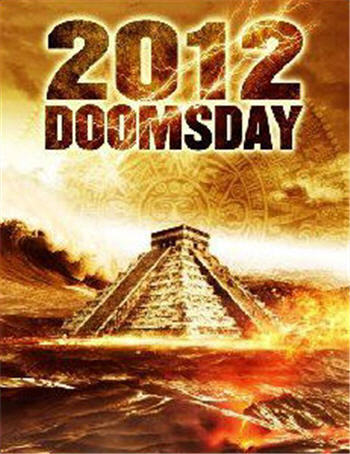
2012 Doomsday

This is the third and final installment of articles on the 2012 doomsday theory—for now. Since I wrote the book 2012, the Bible and the End of the World, which was released last week, the media attention to this issue has been gaining momentum. Articles continue to pop-up in various publications and outlets.

“2012: Will it be the end of the world as we know it?”    Telegraph.co.uk (Sept 3, 2009)

“Mayan Calendar Spurs End-of-the-World Debate”     NPR (July 29,2009)

“Tottering on the Brink of the year 2012”   Sacramento Bee (Sept 22, 2009)

On Fox News, Shawn Hannity recently featured a segment that delved into the whole 2012 subject.  Even Adam Lambert, who finished second in last years “American Idol,” has a new song that is featured on the “2012” movie soundtrack. His debut song is already causing quite a stir on the music scene.

 The movie “2012” continues to roll out new apocalyptic posters and more clips from the movie. The move is directed by Roland Emmerich, the man behind “Independence Day” and “Day After Tomorrow.” The official movie trailer pictures a solar eclipse, rioting at the 2012 London Olympics on Downing Street after the Olympics are suspended, the city of Rio de Janeiro submerged in water while the city’s iconic the Christ the Redeemer statue crumbles, and the dome of St. Peter’s Basilica in Rome crashing down as horrified masses look on. And this is just the beginning of earth’s woes on December 21, 2012.

So, what are people expecting to happen? Many are expecting the earth’s poles to shift, a close call or even a collision with the tenth planet in our solar system (Planet X), solar Armageddon as the sunspot cycle goes wild, world-ending tsunamis, eruption of super volcanoes, and possibly even the beginning of a new age of global consciousness and transformation that will usher in a new age of humanity. And all this, simply because the earth and sun will be in galactic alignment with the equator of the Milky Way galaxy.

This may sound far out to you, but many people are very worried about 2012. I talked with a person very high up at Fox News a couple of weeks ago for an entire hour filling her in on my take on 2012 and the end times. She expressed to me that she had some serious anxiety that there could be something to all of the 2012 stuff. Even some Christians are beginning to promote 2012 as a year of eschatological significance, possibly the year of Christ’s Second Coming and the beginning of the great tribulation. Familiarizing yourself with some key information about 2012 may give you many opportunities in the next three years to be an ambassador for the truth in your office, neighborhood, and family.   

For those who want more information about the whole 2012 doomsday theory, I will be presenting two messages on this topic at the church I pastor (Faith Bible Church in Edmond, OK) on two Sunday evenings, October 11 and 18. You can access them at edmondfaithbible.com.

  1. #1 by John on October 8th, 2009

    How about simply following Christ and help your fellow man instead of spreading fear? Appearing on Fox doesn’t really increase your credibility with people who can think for themselves….

  2. #2 by Mark Hitchcock on October 8th, 2009

    John,

    I believe you have misrepresented my article on 2012. If you will re-read my article, I never said that I appeared on Fox. I simply said that Fox ran a special on the 2012 phenomenon. I don’t feel any need to increase my credibility. Also, it is not my intention to spread fear. My book debunks the entire 2012 end-of-the-world prediction and points people to our Sovereign Lord for strength and comfort in these difficult days in which we live.

    Blessings,

    Mark Hitchcock

  3. #3 by Larry Barnes on October 15th, 2009

    I heard your remarks concerning your book “2012, the Bible and the End of the World” on AFR radio on Thursday. I think that you are very a intelligent person. However, as a serious student of the bible, I must disagree with you on your position that the scriptures teach such things as Jesus coming the second time to rule and reign for 1000 years on the earth. He is ruling and reigning now and has been since Peter declared that Jesus had been raised (resurrected) to sit on David’s throne in heaven; which fulfilled Joel’s prophecy and others concerning that prophecy. In Acts chapter one, when the Holy Spirit came with power (as Joel predicted) the Spiritual kingdom of Christ began and is in force with christians as it’s citizens now. The prophet Daniel declared: “And in the days of those kings shall the God of heaven set up a kingdom which shall never be destroyed” (Dan. 2:44). The “kings” of the prophecy were Roman kings (the fourth part of the image of Nebuchadnezzar’s dream [2:31ff]). The Roman Empire came into dominance in 63 B.C. and it fell in A.D. 476; Therefore, it follows that the kingdom of God was established at some point between those two dates—or else Daniel was a false prophet! There is no evidence that the Roman Empire will be revived to accommodate Daniel’s prediction. John the Baptizer, Jesus himself, and the twelve disciples all preached that the kingdom was “at hand,” literally meaning “is come near” (Matthew 3:2; 4:17; 10:7; cf. Luke 21:30 for the meaning of “at hand”). Thus, they preached the nearness of the kingdom of God, and such can scarcely be harmonized with the notion that it hasn’t come yet. Christ exclaimed:
    “Verily I say unto you, There are some here of them that stand by, who shall in no wise taste of death, till they see the kingdom of God come with power” (Mark 9:1).Either the kingdom came within the lifetime of those to whom he referred, or they are getting very old!
    Notice that Jesus promised that the kingdom would come with power (Mark 9:1). But that power would accompany the reception of the Holy Spirit (Acts 1:8). Thus, the kingdom would come with the arrival of the Spirit. But the Holy Spirit came on the day of Pentecost—some fifty days after Christ’s death (Acts 2:4). Therefore, the kingdom was established at that time. On the day of Pentecost, the apostle Peter preached the fisrt gospel sermon and thereby used one of “the keys of the kingdom” (Matthew 16:19) to admit the obedient believers into the church. When Paul wrote to the Colossians, he affirmed that God “delivered us out of the power of darkness, and translated us into the kingdom of the Son of his love” (1:13). The term “translated” (methistemi) means to “remove from one place to another” (Arndt and Gingrich 1967, 500). The tense of the verb reveals that their entrance into the kingdom had already occurred at some point in the past. When John wrote to “the seven churches that are in Asia” (Revelation 1:4), he stated that Christ had loosed them from their sins by his blood and made them “to be a kingdom” (1:6). Further, he was with them in that kingdom (1:9). The existence of God’s kingdom on earth is further demonstrated by the fact that the same process which moves one into the kingdom also puts him into the church. Jesus taught that the “new birth,” consisting of being born of “water and the Spirit,” enables one to “enter the kingdom” (John 3:5). This is simply receiving the Spirit’s message (the gospel) and being baptized in water—the very thing which puts one into the “one body” (1 Corinthians 12:13), which is the church (Colossians 1:18). Hence, to enter the church is equal to becoming a citizen of the kingdom. The truth is, if there is a dispensation yet to come, namely the millennium, then Peter was wrong, and we are not in the last days but in the next-to-the-last-days. Isaiah 2:4 does not predict a time of universal world peace, rather, it characterizes the peaceful disposition of those formerly hostile nations which “flow unto” the house of God. In 11:1-16, Isaiah prophesies regarding Christ (vv. 1-5) and the establishment of his divine government in the church. Again, the peaceful atmosphere thereof is beautifully described (vv. 6-9) as being in God’s “holy mountain” which is the church (Daniel 2:35, 44). And to cinch the matter, verse ten is quoted in the New Testament (Romans 15:12) by an inspired writer and shown to be applicable to the reception of the Gentile nations into the church. To suggest that it applies to some future age is to totally disregard the inspired interpretation of the prophecy and to reflect upon the credibility of a New Testament writer. The Throne of David
    The premillenial doctrine virtually ignores the spiritual emphasis of Old Testament prophecy. It holds that Christ will return to this earth to be seated on the literal throne of David in Jerusalem. The underlying fallacy of this view is its materialistic approach to the reign of Christ.
    The Lord’s kingdom is not a worldly, political economy, as was David’s, for Jesus plainly said, “My kingdom is not of this world” (John 18:36). Remarkably, premillennialists contend it will be.
    Isaiah prophesied that Christ would be heir to the throne of David.
    “Of the increase of his government and of peace there shall be no end, upon the throne of David, and upon his kingdom, to establish it, and to uphold it with justice and with righteousness from henceforth even for ever” (Isaiah 9:7).
    Also, the angel Gabriel informed Mary concerning her expected Son:
    “He shall be great, and shall be called the Son of the Most High: and the Lord God shall give unto him the throne of his father David: and he shall reign over the house of Jacob forever; and of his kingdom there shall be no end” (Luke 1:32-33).
    The question is not whether Christ was to sit on the throne of David; the controversy is concerning the nature of that throne—i.e., was it to be a material throne, or was it to be the spiritual throne of David?
    That Christ’s reign on the throne of David is of a heavenly, spiritual nature is surely evident from the following considerations:
    The last king to reign on the Davidic throne of the Old Testament era was Jehoiachin (also known as Jeconiah, or in an abbreviated form, Coniah). In Jeremiah 22:24-30, it was prophesied that he and his seed (Judah) would be delivered into the hand of Nebuchadnezzar and cast into a foreign land (Babylon). Specifically, concerning Coniah it was said:
    Write ye this man childless, a man that shall not prosper in his days; for no more shall a man of his seed prosper, sitting upon the throne of David, and ruling in Judah (v. 30).
    The issue is clear: no descendant of Coniah would ever again prosper, ruling from the literal throne of David. Now, the fact is, Christ was of the “seed” of Jechoniah, both from a legal standpoint (through Joseph [Matthew 1:12, 16]) and from a physical vantage point (through Mary, via Shealtiel [Luke 3:27]). It thus follows that Christ could never reign on David’s earthly throne—and prosper!
    The prophet Zechariah prophesied regarding the Christ thusly:
    “Behold, the man whose name is the Branch: and he shall grow up out of his place; and he shall build the temple of Jehovah; even he shall build the temple of Jehovah; and he shall bear the glory, and he shall sit and rule upon his throne; and be shall be a priest upon his throne; and the counsel of peace shall be between them both” (6:12-13).
    This passage positively affirms that Christ would function as priest and reign as king on his throne—simultaneously. But, according to Hebrews 8:4, Christ could not act in the role of a priest while on the earth—for he was not descended from the priestly tribe (Hebrews 7:14). Since the Lord could not be a priest on earth, and since he is priest and king jointly, it necessarily follows that his reign as king cannot be earthly in nature. Rather, it is heavenly.
    The heavenly nature of the reign of Christ is readily apparent in that narrative known as the parable of the pounds, recorded in Luke 19:11-27. The parable involves a certain nobleman (Christ) who went into a far country (heaven) to receive a kingdom and to return. Some citizens, however, sent a message to him, saying, “We will not that this man reign over us.” Finally, having received the kingdom, the nobleman returns to render judgment.
    From this account it is perfectly clear that:
    the kingdom was received in heaven (not on earth);
    the reign was from heaven (not from Jerusalem); and
    the return of the nobleman was after the reception of the kingdom (not prior to it).
    All of these facts are strikingly at variance with the premillennial concept.
    King David was informed by the prophet Nathan:
    When thy days are fulfilled, and thou shalt sleep with thy fathers, I will set up thy seed after thee, that shall proceed out of thy bowels, and I will establish his kingdom. He shall build a house for my time, and I will establish the throne of his kingdom for ever (2 Samuel 7:12-13).
    That this is a prediction of the reign of Christ upon David’s throne is beyond question. In view of this promise, David was told: “[Y]our throne shall be established for ever” (2 Samuel 7:16). Note the application of this context to Christ by an inspired New Testament writer (Hebrews 1:8).
    It is extremely significant to note in this connection that Christ is to be seated on David’s throne, over his kingdom, while this illustrious Old Testament king is still asleep with the fathers, i.e., in the grave. In glaring contrast to this, the premillenial notion contends that Christ will sit upon David’s throne after the resurrection of all the righteous—including David.
    In harmony with the foregoing is Peter’s declaration:
    Brethren, I may confidently say to you regarding the patriarch David that he both died and was buried, and his tomb is with us to this day. And so, because he was a prophet, and knew that God had sworn to him with an oath to seat one of his descendants upon his throne, he looked ahead and spoke of the resurrection of the Christ (Acts 2:29-31, NASB).
    Of special importance here is the infinitive “to seat,” suggesting the design of Christ’s resurrection. As N. B. Hardeman so wonderfully expressed it:
    [G]rammatically, “to sit” is an infinitive with the construction of an adverb, carrying the idea of purpose equivalent to the following expanded form, viz.; He raised up Christ that He should sit, that He might sit, for the purpose of sitting upon David’s throne. If Christ is not on David’s throne, the resurrection might have been deferred until this good hour, or for ages yet to come (1928, 37).
    The reign of Christ on David’s throne is not an event awaiting future fulfillment. The Son of God has been reigning over his kingdom since the day of Pentecost. Hear his promise to early saints:
    He that overcometh, I will give to him to sit down with me in my throne, as I also overcame, and sat down with my Father in his throne (Revelation 3:21).
    Notice the past tense “sat down.” Clearly, Christ is now on the throne.
    If it be contended that this passage speaks of Christ on the Father’s throne and not David’s, it need only be replied that the Father’s throne and David’s are biblically the same. Solomon sat upon the throne of David (1 Kings 2:12), which was in reality Jehovah’s throne (1 Chronicles 29:23). Hence, when Christ sat down on the Father’s throne, he was on the throne of David! He is presently reigning and will continue such until all his enemies are destroyed, the last of which will be death (1 Corinthians 15:25-26).
    To speak of Christ on David’s throne is simply to affirm that our Lord has “all authority”; that to him has been given “all rule, and authority, and power, and dominion” (Ephesians 1:21); indeed, that he exercises a regal reign characteristic of the great King that he is. Compare Matthew 23:2, where the authority of the scribes and Pharisees who taught the law is symbolically described as sitting on “Moses’ seat.”
    The Resurrection
    Based mostly upon a misunderstanding of Revelation 20:1-6, premillennialists urge that there will be two resurrections of the dead. The first will occur at the time of Christ’s coming and will consist of the righteous only. Following this, it is contended, will be the one-thousand-year reign of Christ on earth. Terminating this will be the second resurrection (of the wicked) followed by the judgment.
    There is no real support for this view; in fact, it contradicts numerous verses of clearest meaning. The Scriptures teach that when the Lord Jesus comes:
    time will end;
    all of the dead will be raised at the same time;
    the judgment will occur;
    eternity will commence.
    Consider the following:
    The End
    In 1 Corinthians 15:23, Paul speaks of the “coming” of Christ. With reference to that event, he says, “Then cometh the end” (v. 24). It is obvious that the return of Christ is not to begin an earthly reign; rather, it will bring an end to earthly affairs! Some contend that the adverb “then” (Greek eita) demands an interval which allows time for a millennium. Such is not the case, however. Note the use of eita in connection with eutheos (“immediately”) in Mark 4:17.
    The Day
    Jesus spoke of “the day” in which he would be revealed, i.e., the day of his coming. In presenting this truth, the Lord referred to two divine destructions of former ages (see Luke 17:26-30). Observe that on “the day” that Noah entered the ark, the antediluvian world was destroyed. Further, in “the day” that Lot departed Sodom, the people of the plain cities were destroyed.
    So also, contends Christ, “in like manner shall it be in the day that the Son of man is revealed.” The clear implication of this passage is that the wicked will be destroyed in “the day” of Christ’s coming; certainly there is no room for a thousand-year interval here (cf. Matthew 13:40, 49; 25:31-46; 2 Thessalonians 1:7-9).
    The Hour
    Marvel not at this: for the hour cometh, in which all that are in the tombs shall hear his voice, and shall come forth; they that have done good, unto the resurrection of life; and they that have done evil, unto the resurrection of judgment (John 5:28-29).
    This passage thoroughly negates the two-resurrections theory. Professor David Brown wrote: “It is hardly possible to conceive a plainer statement of the simultaneousness of the resurrection of both classes” (1882, 190).
    See also Acts 24:15, where Paul makes it clear that there “shall be a resurrection [singular] both of the just and unjust.” Thus, a single resurrection involving two groups.
    Certainly there are contexts in which only the resurrection of the righteous is under consideration (cf. John 6:54; 1 Thessalonians 4:13-18, etc.); but these do not cancel the plain force of verses affirming a general resurrection.
    Additionally, the symbolic language of the book of Revelation (20:1-6) must be brought into harmony with these literal New Testament declarations of the coming of Christ, the resurrection, and the judgment. It most definitely is not a sound hermeneutical principle to force numerous lucid verses into harmony with a solitary symbolic reference.
    What about Revelation 20:1-6?
    The twentieth chapter of the book of Revelation, verses one through six, is the very heart and soul of the theory of premillennialism. It is what George Murray calls “the very citadel and bulwark of premillennial eschatology” (1948, 175). Indeed, it may be said, were it not for these half dozen verses, the theory would not even have a semblance of suggestion in the New Testament.
    As Albert Barnes observes:
    It is admitted, on all hands, that this doctrine, if contained in the Scriptures at all, is found in this one passage only. It is not pretended that there is, in any other place, a direct affirmation that this will literally occur, nor would the advocates for that opinion undertake to show that it is fairly implied in any other part of the Bible. But it is strange, not to say improbable, that the doctrine of the literal resurrection of the righteous, a thousand years before the wicked, should be announced in one passage only (1954, 428-429).
    Earlier, it was stressed that it is foolish to attempt a forced harmony between the figurative elements of Revelation 20:1-6 and the premillennial theory—with the latter being contradicted by so many plain passages of Scripture. Making this very point with reference to Revelation 20:1-6, noted scholar Charles Hodge wrote:
    It is a sound rule in the interpretation of Scripture that obscure passages should be so explained as to make them agree with those that are plain. It is unreasonable to make the symbolic and figurative language of prophecy and poetry the rule by which to explain the simple didactic prose language of the Bible. It is no less unreasonable that a multitude of passages should be taken out of their natural sense to make them accord with a single passage of doubtful import (1960, 842).
    Finally, note this significant quotation from Geerhardus Vos concerning the relationship of the book of Revelation to the premillennial view:
    In regard to a book so enigmatical, it were presumptuous to speak with any degree or dogmatism, but the uniform absence of the idea of the millennium from the eschatological teaching of the New Testament elsewhere ought to render the exegete cautious before affirming its presence here (1939, 987).
    The Book of Revelation: Its Purpose and Form
    Preliminary to this discussion should be a few observations concerning the purpose and form of the Apocalypse. The church of the apostolic age was being severely persecuted. Indeed, in subsequent years, it was subjected to a veritable bloodbath.
    The design of Revelation is thus to show that the relatively infant church would be heir to much persecution and suffering. Too, the saints must persevere and by their faith overcome these trials. Finally, the document affirms that Christ would ultimately be victorious over all his enemies.
    That the book of Revelation is highly symbolic is evidenced not only by its content, but also by the introduction. Christ “signified” the message by his angel unto John (1:1). The question naturally arises as to why the Lord chose symbols to be the vehicles of these truths. Symbolism frequently serves a two-fold purpose—to reveal and to conceal. Occasionally, the Lord’s parables functioned in this capacity, i.e., they portrayed certain truths to the disciples while withholding the same from those who were spiritually dull (cf. Matthew 13:10-15).
    The theme of victory within the book of Revelation was largely couched in the imagery that adorned the Old Testament. The Christians were undoubtedly familiar with this sort of language; so the message of hope would be grasped by those early disciples. At the same time, the defeat of the persecuting powers was veiled to those not discerning the figures. One can well imagine, for example, how trials for the Christians might have been intensified had they been discovered circulating a document which literally predicted the overthrow of their persecutors.
    And so, as George Ladd points out: “In the apocalypses, symbolism becomes the main stock in trade, particularly as a technique for outlining the course of history without employing historical names” (1999, 52).
    It is thus a serious error to literalize the book of Revelation, and this is precisely what the premillennialists have done with the first six verses of chapter twenty.
    The Symbols Employed
    An examination of the first half-dozen verses of Revelation 20 evidences the following symbols: a key, a chain, a dragon or serpent, an abyss, a thousand years, thrones, a beast, marks on foreheads and hands, and a resurrection.
    It is certainly a strange interpretation which contends that a figurative serpent was bound with a figurative chain and thrown into a figurative abyss which was locked with a figurative lock that had a figurative key, to be confined for a literal thousand years! It ought to be manifestly obvious that no literal reign of Christ upon the earth is here alluded to. Even if one does not understand the specific design of the symbols, he can see the symbolic import of the thousand years.
    Significant Omissions
    Perhaps this context is more significantly devastating to the premillennial theory for what it does not say, but which, if the theory were true, it surely would have mentioned. Nothing is said of:
    Christ’s second coming;
    the establishment of a kingdom;
    an earthly regime;
    a bodily reigning;
    the throne of David; or
    the Jews being regathered to Palestine.
    All of these elements are vitally important to the millennial view, yet they are conspicuously absent from this narrative!
    The Gist of the Narrative
    Obviously the context of Revelation 20:1-6 is a part of the design of the book as a whole. Many scholars believe that this section is a symbolic description of the revival of Christianity from a period of bloody persecution. For example, note that earlier (6:9-11) John had seen the “souls” of the martyrs “underneath the altar” crying, “How long, O Master, the holy and true, dost thou not judge and avenge our blood on them that dwell on the earth?”
    In chapter twenty, however, the apostle views the “souls” on “thrones” reigning with Christ. For a while, Christianity appeared to have been buried in tribulation, but ultimately, it emerged. It was, figuratively speaking, resurrected.
    The Scripture speaks of figurative resurrections as well as literal ones (see Isaiah 26:19; Ezekiel 37:12; Romans 11:15).
    It would, therefore, not be inconsistent with analogy of prophecy if we should understand the Apostle as here predicting that a new race of men were to arise filled with the spirit of the martyrs, and were to live and reign with Christ a thousand years (Hodge, 842).
    That this resurrection alludes to the triumphs of persecuted saints is further borne out by the fact that “the second death hath no power” over the reigning ones, which harmonizes perfectly with chapter two, verse eleven—“He that overcometh shall not be hurt of the second death.” Thus, the resurrection of 20:6 is a figurative way of saying “overcome.”
    The one thousand years, of course, also would be symbolic in scope, suggesting either that the victory of God’s cause—as considered in this context—would be lengthy in span, or possibly the one thousand years may denote the completeness of the saints’ triumph. One may confidently say that the term “thousand” is never used in the book of Revelation in a literal sense.
    Conclusion
    There is no support for the theory of premillennialism—not in the book of Revelation, nor elsewhere in the Bible. It certainly is difficult to abandon a theory that has been entertained for many years, but when one discovers that a religious view is false, he should reject it in deference to truth. I hope to read your comments. Thank you very much.

  4. #4 by Mark Hitchcock on October 15th, 2009

    Larry,

    There’s nothing new in your argument that hasn’t been presented by opponents of premillennialism for many years. Alll of the points you make have been effectively answered by premillennialists, but I don’t have time right now to address them one by one. Moreover, I don’t think any arguments I would present would make any difference to you anyway.

    When you use dogmatic, sweeping statements like “There is no support of premillennialism–not in the book of Revelation, nor elsewhere in the Bible,” you effectively end any constructive debate. It’s clear that there’s nothing I could say to even get you to think about premillennialism. But here is one point for you to consider: If premillennialism is completely devoid of any biblical support whatsover, why was it the view of the early church for the first 300 years of church history? Papias, who was a disciple of the apostle John, was a chiliast (from the Greek word for 1,000), as was Irenaeus (who was discipled by Polycarp, who was a disciple of John), Justin Martyr, Victorinus, etc. etc. etc. The fact that all the luminaries of the early church held to a literal, future, 1,000 year, earthly reign of Christ does not prove that this view is true, but it should cause a person to be a little less dogmatic and dismissive of this viewpoint. Also, when you say, “It certainly is difficult to abandon a theory that has been entertained for many years, but when one discovers that a religious view is false, he should reject it in deference to truth,” remember that your argument cuts both ways.

    Blessings,

    Mark

  5. #5 by larry Barnes on October 16th, 2009

    Thank you. I’m glad that you recognize that I have “nothing new” to offer, I believe that we should stick to the ancient text-God’s word. But your are wrong about whether I would even consider your remarks on the scriptural position. I would read and consider your words just as the noble Bereans. I used to hold to the position of premillennialism, but I studied the scriptures without prejudice and changed. You did not mention biblical support, only “church history”; these are not the same. As a lawyer I would expect a better argument from you. I stand on God’s word that premillennialism is a man-made doctrine and cannot be sustained or proven by the scriptures. Thank you for your time.

  6. #6 by Shauna on October 18th, 2009

    I am so thankful that I can stand on the Word of God to interpret itself so I don’t have to waste untold lines of type to quote what other men (Murray, Barnes, Geehardus Vos, Ladd, Hodge, Hardeman etc….) say we should believe about Gods Word…….! God means what He says and says what He means and gives us all the tools we need to know His Word IN His Word! Amen!…..another Christ honoring, Bible believing, discerning, premillenial believer.

  7. #7 by Kathy on October 27th, 2009

    Mark, I really appreciate all your word on this subject. I only recently became aware of this subject seeing the title of the upcoming movie.

    I LAUGH at all of it…because I KNOW who is in control!!! God….and God alone. The enemy of our souls wants to keep people scared out of their wits, and a darn lot WILL BE JUST THAT….because they do NOT believe in the existence of God. When you lack that belief, what have you but fear of the future events proposed by this movie and all the other hype out there.

    I am so glad to KNOW God does exist, that gives me such peace. I KNOW the end is coming, but we have PROMISES galore on that end…and they are GRAND!

    God Bless, keep on preachin’ and teachin’!!!

  8. #8 by megan pine on November 8th, 2009

    Im really scared if all that is true i really hope it isnt im only little and im really really terrified!!!

  9. #9 by azher ahmed on November 9th, 2009

    assalamualikum how r u? let me know first that how u can say exactly taht dooms day is at 2012 . in bible only written that the dooms day come but exactly u cant say when the doomdays come . In holy quraan speaks about the doomday but in holy quraan also its not written when the exactly doomsday come . but there is a sign of doomday jesus(pbuh) he will come he will kill anticrist then . the dooms day come bro.

  10. #10 by tammy on November 9th, 2009

    I have not yet read your articles, seen the movie or read the book, but I believe the Bible says no man knows the day nor the hour, not even the angels in heaven know.

  11. #11 by Mark Hitchcock on November 10th, 2009

    Tammy,

    You’re right. Jesus said that in Matthew 24:34-35 and again in Acts 1:7. In my book I debunk the whole 2012 doomsday theory and present what I believe the Bible says about the end times.

    Blessings,

    Mark

  12. #12 by Tam on November 11th, 2009

    Mark, I have heard you speak before at prophecy conferences and always enjoy your common sense & faith filled messages. This series on 2012 uplifted me beyond measure. I sometimes think I should just hunker down until the rapture!! your message was definitely a word in due season.

    The comments above regarding premillennialism take away from the message of the bible of God’s grace, mercy and love and that His judgement is absolute.

    If Christians would quit arguing and being fear-filled, imagine the great things that could happen in this world!

    Thank you for preaching hope, faith, and keeping our eyes on heaven. Perhaps those who want to argue whether we are in the tribulation or it has already happened should take that energy and show the love and compassion Jesus did to those who do not know the Lord.

    God help us all if we can’t come together!! Blessings upon you and your family.

  13. #13 by mijadedios on November 17th, 2009

    I haven’t read your book, so I can’t comment on that. I did see the movie! As a Saved by the Blood of Jesus Christ, Born again believer who has been redeemed and set apart for God, I thought it would be entertaining to see man’s interpretation of the end of the world, since I happen to know it will be a lot worse for people who aren’t saved (I’ve read the last book of the Bible a few times!). The movie was filled with deception and prompting. I plan to write up on it after a few more hundred million people see it. I was kinda perturbed by the whole Mayan 2012 stuff…I saw the books in Barnes& Nobel and was upset, because God will not share His glory with another and all these silly books can’t change God’s providence. He will Return when He returns and I’m looking up as I type!

  14. #14 by azher ahmed on November 20th, 2009

    salamalikum
    then become a muslim and see what the quraan says and what the bible says

  15. #15 by tyler m taber on November 21st, 2009

    Mark, great post.

    It’s too bad people like Larry Barnes can’t approach this topic with an open mind.

  16. #16 by Lyndee on December 17th, 2009

    I am interested in this topic ALOT. I know for a fact that the world will NEVER end as the prayer states, “world without an end.”

    However, there are MANY signs that we are heading towards the rapture. Many believe
    that this current Pope will be the last Pope
    according to St. Malachy.

    I think that it is interesting how this Pope thing is happening at the same time that
    we are looking at a One World Government, the Euro Dollar, ‘alot more” earthquakes, hurricanes, and other so-called mother nature acts.

    The President of Iran and his hate for Israel and how he wants to wipe that nation off the face of the earth.

    Instant communication, knowledge, etc. this is all adding up to something will be happing around that date.

    Who knows the date Dec. 21, 2012 might just be another Jupiter Effects day – where many feared that that will be the last day on earth.

    Life went on!!!! So who knows about Dec. 2012. Nothing may not happen BUT something will be happening in the near future.
    Christ WILL definitely be returning and the rapture will be happening.

  17. #17 by John on December 21st, 2009

    Mark, I heard you on God TV at the Prophecy Conference in St. Pete. Good stuff. I especially appreciate that I can look you up on the Web and find that your have developed an interactive website that provides a forum to exchange views. I personally believe in a pretrib rapture because it makes sense for God to finally say “OK, folks who don’t accept my gift of salvation, you can now recieve the consequences of your decision but I need to bring my children home before these consequences are played out. It would not be fair for them to have to receive the same consequences as you because they received my invitation and I have adopted them.” He is a loving Father, after all.

  18. #18 by Darrell Douglass on January 6th, 2010

    Mark, I read your book on 2012 and your earlier book on Prophecy and enjoyed both of them. I think you explain your points well and I agree with you on almost all points. Various people that think Israel has been replaced by the church should note the things that are going on today and see that doesn’t fit. The devil is trying hard to destroy Israel and anything Godly. Paul taught about the future of Israel in Romans and one of my favorite versus about this is Romans 11:25. Presently, most of the Jewish people are still under the blindness that Paul taught about and soon the blindness will come off. Jesus told his disciples that He will not return again (second coming) until they (Jewish people) have called for Him: Matthew 23:39. I recently found a scripture that reveled when Jesus blinded the Jewish people, shortly before the crucifixion. It’s at Luke 19:42. I also received some spiritual enlightenments from reading Daniel 9:(24-27) that concerns prophecy and Israel. I believe the prophecy is exclusive to Israel since it’s for Daniel’s people. This prophecy has goals to be reached before the end. As of today, the Jewish people still haven’t anointed the most Holy. I believe that the end of the 69th week occurred at the triumphal entry: Luke 19:(35-38) and the prophetic time clock temporary stopped the same day when Jesus cried out for the Jewish people and spiritually blinded them. I think the time clock to finish the last week (meaning 7 years), will start again soon after the fullness of the Gentiles come in:(Romans 11:25) and when the anti-christ confirms a covenant with many for 7 years (Daniel 9:27). I have read Revelations and believe that Jesus informed us about things to come including many aspects of the different churches. The Ladocian church reflects many churchs of today with their attitudes and being lukewarm. If your lukewarm, quickly turn your heater up for the Lord. Hope everyone studies to show themselves approved unto God as Paul taught in 2st Timothy 2:15. best regards, Darrell

  19. #19 by kathy on February 1st, 2010

    I read the bible and do lots of studying and try to research all of this. I know that we are not to know the day and time but I believe we are in the beginnings of sorrows as the bible says.

    It’s difficult to discern what pastor to study under. Things get so twisted. I have seen Mr Bakker on the church channels now and he is all out about being prepared for the oncoming devistation that is coming. He shares few bible scriptures, it’s mostly a shopping show for the apocalypse. 50 minutes of buy this and here’s a Lori locket and food and water storage for the oncoming earthquakes and such. It’s almost like he is using the fear factor to make money. I’m not sure.

    I know with all that is being said It does scare the bejebbers out of me. Mr Bakker’s quote is Joeseph’s storehouse. He’s even prohesing earthquakes and volcano’s in the US. Along with tsunami’s. I agree that we should have some preparation for the economic downshift that is coming, we are not out of the woods on that one. But it’s like all hell is going to break loose and we need the “grab and go bags” and all.

    I grew up with the threat of the bombs, air raid practice in school. Tuck your head between you knees. We were always waiting for the bombs to drop. I am so tired of this doom and gloom. I thought that we were to look up for our redemption was at hand. Jesus was going to catch us up to him and we would have our new body. I think from what I have read that pre rapture is what comes through in the Bible. I am not real bright, I have a difficult time remembering where the scriptures are but I read it all over and over and have so many teaching dvd’s and commentary books from Jimmy Swaggart.

    I haven’t seen the movie 2012, not sure I want to. I think it will just scare me even more. All I know is I will keep on studying and saying my prayers and put it in the hands of the Father.
    I am going to get your new book and yes I do have emergency supplies.

    I don’t even know if I make sense any more.

  20. #20 by joyce colon on February 3rd, 2010

    note the mayan didn’t predict the end of the earth only the end of the world as we know it. Isn’t that also what is predicted in the bible? No, now is not the time to fear but to lift our heads and know that our deliverance is at hand not frighten little kids. Mark, on a different subject, what if the antichrist is not a man but a religion. one is and is not and yet is. the image of this beast have three of like nature , the false prophet, the teacher of lies and the hidden one. In this context he has already stood on the temple mount as his own, his “image” has also already done so. Who could make war against him? who indeed I’m not saying any names nor religions but I do ask that you consider what I’m saying

  21. #21 by Iron on April 8th, 2010

    Will everything end in 2012?

(will not be published)

  1. No trackbacks yet.